

TIN TỨC SẢN PHẨM
HVAC là gì? Cấu tạo và nguyên lý hoạt động của HVAC
Khi nhắc đến hệ thống sưởi ấm, thông gió và điều hòa không khí thì không thể không nhắc đến HVAC. Vậy HVAC là gì? Cấu tạo và nguyên lý hoạt động của HVAC ra sao? Để hiểu rõ hơn, hãy cùng chúng tôi tìm hiểu trong bài viết “Cấu tạo và nguyên lý hoạt động của HVAC” ngày hôm nay.
Contents
HVAC là gì?
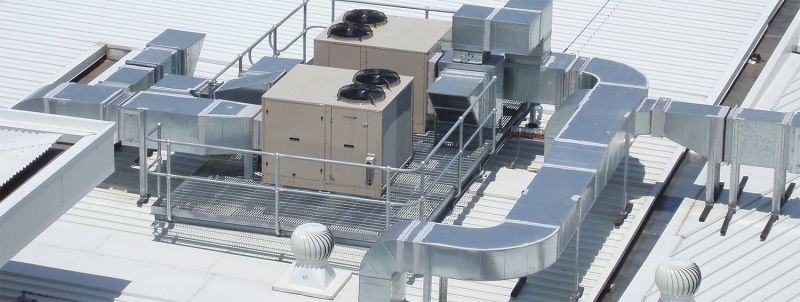
HVAC là từ viết tắt của cụm từ Heating, Ventilating, and Air Conditioning tạm dịch là hệ thống sưởi ấm, thông gió và điều hoà không khí. Nhìn chung, hệ thống điều khiển HVAC là hệ thống có tác dụng kiểm soát nhiệt độ, độ ẩm và chất lượng không khí.
Các thiết kế của hệ thống HVAC dựa trên nguyên tắc truyền nhiệt, nhiệt động lực học và cơ học chất lỏng để tạo ra không gian có nhiệt độ và độ ẩm đạt tới mức cao nhất. Nhờ giữ vai trò quan trọng trong việc đảm bảo không khí cũ được thay thế bằng không khí trong lành từ bên ngoài, hệ thống HVAC được áp dụng phổ biến trong các cơ sở thương mại và nơi tập trung nhiều dân cư.

Cấu tạo và nguyên lý hoạt động của hệ thống HVAC
Cấu tạo
Cấu tạo của hệ thống HVAC bao gồm:
- Hệ thống sưởi bao gồm: Lò hơi, bơm nhiệt, lò sưởi,…
- Hệ thống thông gió
- Hệ thống điều hòa không khí
Nguyên lý hoạt động
- Không khí đi qua cụm khí đầu vào, sau đó đi qua AHU để chỉnh áp suất, lọc sơ bộ lượng tiểu phân và quá trình này được kiểm soát bằng van chỉnh gió.
- Sau khi nhiệt độ ở AHU được điều chỉnh, khí từ bên ngoài đi qua để nhiệt độ trở về 22 độ.
- Khi khí tươi đến khu vực lọc HEPA nhằm loại bỏ các tiểu phân có kích thước nhỏ, vi khuẩn và sau đó di chuyển đến phòng sạch.
- Khí tươi sau khi đi qua các bước trên sẽ giữ lại được 90% khí còn 10% khí thải sẽ thải ra môi trường.
Chức năng của hệ thống HVAC
- Cung cấp chất lượng không khí tốt nhất cho con người dù ở bất cứ điều kiện môi trường nào.
- Sở hữu khả năng tăng thông gió, hạn chế sự xâm nhập của luồng không khí không mong muốn. Đồng thời có tác dụng duy trì áp lực giữa các không gian trong 1 cơ sở.
- Có tác dụng loại bỏ nguồn không khí bên trong sau đó thay thế nó bằng một hệ thống để phân phối không khí khác từ bên ngoài.
- Ứng dụng tại các cơ sở thương mại cũng như trong đời sống dân cư nhờ mang lại sự thoải mái và dễ chịu cùng bầu không khí trong lành.
Lựa chọn thiết bị HVAC như thế nào?
Trong khi lựa chọn một hệ thống HVAC, cùng những thiết bị thành phần của nó, bạn cần quan tâm đến các yếu tố sau:
Thông gió tự nhiên: nên cân nhắc đến việc sử dụng bộ phận thông gió tự nhiên và lắp đặt cửa sổ để cung cấp nguồn gió bổ sung. Lúc này, bạn cũng cần chú ý một số đặc điểm sau:
- Trường hợp môi trường bị nhiều ô nhiễm và bụi bẩn, nó sẽ làm giảm chất lượng không khí ở trong nhà.
- Cửa sổ cần bố trí trong khoảng từ 3-6 feet so với mặt sàn.
- Hệ thống cửa sổ cần tạo thành dấu chặt chẽ khi đóng cửa.
- Nên lắp đặt cửa sổ tại các mặt đối diện của tòa nhà để tạo ra sự thông thoáng.
Lắp đặt thiết bị ở đâu để khả thi và xử lý không khí trung tâm HVAC (AHU) nhằm phục vụ tối đa nhiều không gian nhất. Khi đó, bạn cần tìm kiếm những tính năng trong AHU như:
- Chảo hai tầng có tác dụng ngăn nước đọng.
- Các cửa ra vào có lắp thêm bản lề để tiếp cận và vận hành dễ dàng.
- Cần trang bị tủ tường đôi để ngăn chặn độ ẩm hoặc hư hỏng cơ học.
- Để giảm chức năng rò rỉ khí và cải thiện chất lượng của không khí bạn cần bố trí tủ kín.
- Bạn cần Gasket đệm cửa hai lớp để cách nhiệt và cách âm hiệu quả.
- Để giảm bảo trì bộ lọc và tăng hiệu suất của quạt bạn cần thực hiện việc mở rộng bộ lọc với diện tích trên bề mặt.
- Để hạn chế tình trạng rò rỉ thì doanh nghiệp nên thiết kế thêm bộ lọc khí.

Phương pháp bảo trì hệ thống HVAC
Như đã biết, mỗi hệ thống HVAC sẽ yêu cầu một cách thức bảo trì khác nhau nhằm mang đến sự tiện dụng riêng biệt của nó. Nhờ việc bảo trì thường xuyên giúp làm sạch và thay thế những bộ lọc không khí đã bị bẩn. Bởi nếu chúng không được bảo trì liên tục sẽ làm giảm hiệu quả của hệ thống.
Ngoài ra, nếu sự lưu thông không đầy đủ sẽ khiến cho thiết bị bay hơi cuộn thành dạng sóng, làm giảm luồng khí phát ra ngoài. Điều này có thể khiến các bộ phận điện tử bị nóng và gây ra tình trạng hỏa hoạn. Ngoài việc thay thế những bộ lọc không khí, các cuộn dây nên được cuộn lại gọn gàng và cần được làm sạch định kỳ.
Phía trên là những thông tin về “Cấu tạo và nguyên lý hoạt động của HVAC”. Hy vọng giúp bạn hiểu rõ hơn về thiết bị này. Nếu bạn có nhu cầu mua vật tư thiết bị máy lạnh, điều hòa thì đừng quên liên hệ đến Điện Lạnh Toàn Phát theo địa chỉ dienlanhtoanphat.vn để được tư vấn cụ thể!
Cycling Betting Odds Calculation: Betzella’s Technical Breakdown Approach
The world of professional cycling has evolved dramatically over the past two decades, transforming from a sport dominated by intuition-based predictions to one where sophisticated mathematical models determine competitive outcomes. Modern cycling betting markets require unprecedented precision in odds calculation, as races can be decided by milliseconds and influenced by countless variables ranging from weather conditions to team dynamics. Betzella’s approach to cycling odds calculation represents a significant advancement in sports analytics, combining traditional statistical methods with cutting-edge algorithmic processing to create more accurate predictive models.
Historical Evolution of Cycling Odds Methodology
Traditional cycling odds calculation relied heavily on basic statistical analysis, primarily focusing on recent race results and general form assessments. Early bookmakers would examine a cyclist’s performance over the previous season, consider their success rate on similar terrain, and make relatively simple adjustments for factors like weather or field strength. This approach, while functional, often missed crucial nuances that could dramatically impact race outcomes.
The introduction of power meter technology in professional cycling during the early 2000s marked a pivotal shift in data availability. Suddenly, analysts could access precise measurements of rider output, efficiency metrics, and performance consistency across varying conditions. This technological advancement coincided with the rise of sophisticated computing capabilities, enabling more complex mathematical modeling approaches.
Betzella recognized early that traditional methods were insufficient for modern cycling’s complexity. Their technical team began developing proprietary algorithms that could process vast amounts of performance data, including heart rate variability, power-to-weight ratios, aerodynamic efficiency measurements, and even biomechanical analysis from training sessions. This comprehensive approach allows for far more nuanced odds calculation than previously possible.
The company’s methodology incorporates machine learning elements that continuously refine predictive accuracy based on actual race outcomes. Unlike static models that rely on predetermined formulas, Betzella’s system adapts and learns from each event, identifying patterns that human analysts might overlook. This evolutionary approach has proven particularly effective in stage races where form can fluctuate significantly over multiple days of competition.
Technical Framework and Data Integration
Betzella’s technical breakdown approach centers on a multi-layered analytical framework that processes information across several distinct categories. Performance metrics form the foundation, incorporating not just race results but detailed training data, physiological measurements, and equipment specifications. The system analyzes power output curves, lactate threshold variations, and recovery patterns to build comprehensive rider profiles.
Environmental factors receive equal attention in the calculation process. Wind speed and direction data, temperature variations, humidity levels, and road surface conditions all influence the final odds. The system maintains historical databases of how specific riders perform under various environmental conditions, allowing for precise adjustments based on race-day forecasts.
Team dynamics present another crucial element in modern cycling odds calculation. Betzella’s approach examines team composition, tactical tendencies, and support rider capabilities. The system evaluates how effectively teams execute specific race strategies, their success rates in different tactical scenarios, and the impact of key personnel changes on overall performance.
Race-specific variables add another layer of complexity to the calculation process. Course profiles, including gradient percentages, technical difficulty ratings, and strategic positioning opportunities, all factor into the final odds. The system maintains detailed databases of how different rider types perform on specific course characteristics, enabling precise predictions about competitive advantages.
Advanced cycling betting analysis now incorporates real-time data streams during events, allowing for dynamic odds adjustments as races unfold. Betzella’s system can process live telemetry data, including power output readings, positioning information, and tactical developments, to update odds calculations throughout an event. This capability represents a significant advancement over traditional pre-race-only calculation methods.
Mathematical Models and Algorithmic Processing
The core mathematical framework underlying Betzella’s approach utilizes Monte Carlo simulation techniques to generate probability distributions for race outcomes. Rather than relying on single-point estimates, the system runs thousands of race simulations using slightly varied input parameters, creating comprehensive probability ranges for different finishing scenarios.
Bayesian statistical methods play a crucial role in the calculation process, allowing the system to update probability assessments as new information becomes available. This approach proves particularly valuable when dealing with incomplete or uncertain data, as it provides a mathematically sound method for incorporating prior knowledge while remaining responsive to new evidence.
The algorithmic processing incorporates neural network architectures specifically designed for time-series analysis. These networks excel at identifying complex patterns in performance data over time, recognizing subtle indicators of improving or declining form that might escape traditional statistical analysis. The system can detect early signs of peak fitness or potential performance decline weeks before they become apparent in race results.
Risk assessment algorithms evaluate the uncertainty inherent in each prediction, providing confidence intervals alongside odds calculations. This approach acknowledges that cycling outcomes can be inherently unpredictable, with mechanical failures, crashes, or tactical miscalculations potentially overriding pure performance metrics. By quantifying this uncertainty, Betzella’s system provides more transparent and reliable odds calculations.
The integration of ensemble modeling techniques combines multiple predictive approaches to generate final odds calculations. Rather than relying on a single algorithmic method, the system incorporates results from various models, each optimized for different aspects of race prediction. This diversified approach reduces the risk of systematic errors while improving overall predictive accuracy.
Validation and Performance Optimization
Betzella’s technical approach includes rigorous validation procedures to ensure calculation accuracy and reliability. Historical backtesting involves applying current algorithms to past race data, comparing predicted outcomes with actual results to identify areas for improvement. This process helps refine model parameters and eliminate systematic biases that might skew odds calculations.
Cross-validation techniques test the system’s performance across different race types, terrain characteristics, and competitive levels. The validation process examines how well the algorithms perform for Grand Tours versus one-day classics, mountain stages versus time trials, and professional races versus amateur events. This comprehensive testing ensures robust performance across the full spectrum of cycling competitions.
Performance metrics extend beyond simple accuracy measurements to include calibration assessments and profit-loss analysis. The system evaluates whether predicted probabilities align with actual outcome frequencies, ensuring that stated confidence levels reflect genuine uncertainty levels. This calibration process is essential for maintaining long-term reliability in odds calculation.
Continuous monitoring systems track algorithm performance in real-time, identifying potential issues before they impact calculation accuracy. Automated alerts notify technical teams when performance metrics fall outside acceptable ranges, enabling rapid response to system anomalies or changing competitive conditions.
The optimization process incorporates feedback loops that automatically adjust model parameters based on recent performance data. Rather than requiring manual intervention, the system continuously fine-tunes its calculations to maintain optimal accuracy levels. This self-improving capability ensures that Betzella’s approach remains effective even as cycling competition evolves and new performance factors emerge.
Betzella’s technical breakdown approach to cycling odds calculation represents a sophisticated fusion of traditional statistical analysis with modern computational capabilities. By incorporating comprehensive data sources, advanced mathematical modeling, and continuous optimization processes, the system achieves unprecedented accuracy in predicting cycling race outcomes. This methodology demonstrates how technological advancement can enhance sports analytics, providing more reliable and transparent odds calculation methods that benefit both analysts and cycling enthusiasts seeking deeper insights into competitive dynamics.